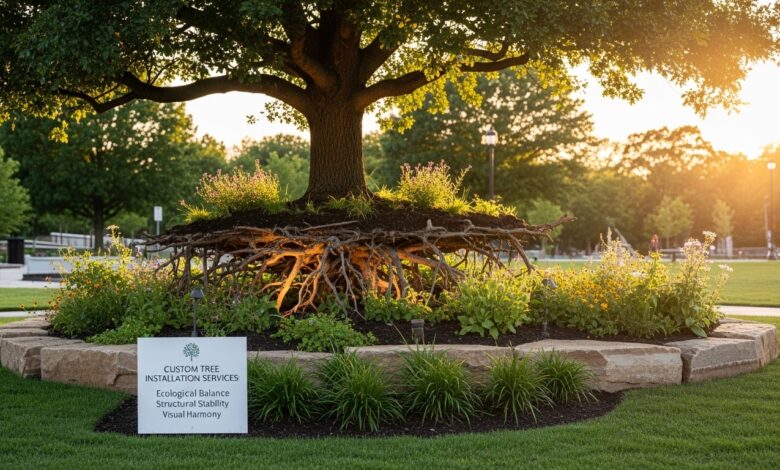
Custom Tree Installation Services Focused on Ecological Balance, Structural Stability, and Visual Harmony

Introduction
Trees are more than just a beautiful addition to landscapes; they provide shade, improve air quality, support wildlife, and enhance the overall environment. However, ensuring that a tree thrives requires careful planning and proper techniques, starting from tree installation. Planting a tree might seem simple, but without proper methods, it can lead to stunted growth, disease, or even death. Understanding the fundamentals of tree installation from selecting the right tree to proper planting techniques is crucial for both homeowners and landscapers who aim to cultivate healthy and sustainable landscapes.
- Understanding the Importance of Proper Tree Installation
Proper tree installation sets the foundation for a tree’s long-term health. Trees that are installed correctly develop strong root systems, resist disease, and adapt to their environment more effectively. On the other hand, poorly installed trees are prone to root rot, structural instability, and nutrient deficiencies. The process is more than just digging a hole and placing the tree in the ground; it requires attention to soil conditions, spacing, planting depth, and ongoing care. Recognizing the importance of proper installation is the first step toward ensuring that a tree not only survives but thrives for decades.
- Selecting the Right Tree for Your Space
Choosing the right tree is a critical aspect of successful tree installation. Factors to consider include the tree’s mature size, growth rate, root system, and environmental requirements such as sunlight, soil type, and water needs. Native trees are often preferred because they are adapted to local climate and soil conditions. Additionally, selecting a species resistant to common pests and diseases can reduce maintenance and improve longevity. Proper planning at this stage helps avoid future problems, such as overcrowding, interference with buildings, or damage to underground utilities.
- Preparing the Planting Site
Once the right tree has been chosen, preparing the planting site is essential. Start by clearing debris, weeds, or grass from the area. The soil should be loosened to allow roots to spread easily and should be tested for drainage, pH levels, and nutrient content. If the soil is compacted, it may require amendment with organic matter such as compost or well-rotted mulch. Correct site preparation ensures that the tree roots have the best possible conditions to establish themselves and absorb essential nutrients efficiently.
- Proper Planting Techniques
The actual tree installation requires careful attention to planting techniques. Begin by digging a hole that is twice as wide as the tree’s root ball but only slightly deeper than its height. This ensures the roots have enough space to expand horizontally. Remove any burlap or wire baskets from container-grown trees to prevent future root girdling. Place the tree at the correct depth, ensuring the root flare is visible above the soil line. Backfill with native soil, gently tamping it down to remove air pockets without compacting it excessively. Water thoroughly to help settle the soil and provide immediate hydration for the tree.
- Staking and Support
Newly planted trees often require staking to provide stability while roots establish themselves. Staking should be done carefully to avoid damaging the trunk or restricting natural movement. Use soft ties and flexible materials, and remove the stakes after one to two years once the tree can support itself. Proper support prevents leaning, breakage, and structural weakness, which are common issues with newly installed trees.
- Mulching for Moisture and Protection
Applying mulch around the base of a newly installed tree provides several benefits. Mulch helps retain soil moisture, regulate temperature, suppress weeds, and prevent mechanical damage from lawn equipment. A layer of 2–4 inches of organic mulch, such as wood chips or bark, is ideal. Ensure the mulch does not touch the trunk directly, as this can cause rot or attract pests. Mulching is a simple yet highly effective step that contributes significantly to the success of tree installation.
- Watering and Early Care
Proper watering is crucial during the initial establishment period. Newly planted trees need consistent moisture, particularly during dry spells, but overwatering can be harmful. Deep, infrequent watering encourages roots to grow downward, creating a strong and stable foundation. Monitoring soil moisture, adjusting watering frequency according to weather conditions, and avoiding shallow surface watering are essential for promoting healthy growth. Additionally, avoiding fertilization immediately after planting can prevent root burn; it is best to fertilize after the tree has become established.
- Pruning and Structural Training
Pruning is another important aspect of tree installation and long-term care. Remove any damaged, dead, or crossing branches at the time of planting to reduce stress and encourage proper structure. Avoid heavy pruning during the first year, as the tree needs energy to establish its root system. Correct pruning promotes healthy growth, improves airflow through the canopy, and reduces the likelihood of disease or structural problems in the future.
- Common Challenges and How to Avoid Them
Despite careful planning, newly installed trees may face challenges. Poor drainage can lead to root rot, compacted soil may restrict root expansion, and pests or diseases can weaken young trees. Monitoring the tree regularly for signs of stress, such as wilting leaves, discoloration, or abnormal growth, is essential. Preventive measures, including soil improvement, proper watering, staking, and timely pruning, significantly reduce the risk of problems and increase the chances of a successful installation.
- Long-Term Maintenance for Sustainable Growth
Tree installation is only the first step in a long-term care process. Once established, trees benefit from ongoing maintenance, including periodic watering during dry periods, mulching, pruning for structure, and monitoring for pests or diseases. Maintaining a tree properly ensures not only its survival but also its contribution to the surrounding environment, including shade, habitat for wildlife, and aesthetic value. Well-maintained trees increase property value, enhance landscapes, and contribute to environmental health.
Conclusion
Successful tree installation requires planning, careful technique, and consistent care. From selecting the right species and preparing the soil to proper planting, staking, mulching, and watering, each step influences the tree’s long-term health and growth. Trees planted with attention to detail provide countless benefits, from environmental improvement to aesthetic enhancement and ecological contribution. Understanding the principles of tree installation ensures that these living assets thrive for decades, supporting both human and environmental well-being.