Commercial Truck Parking: Essential Strategies for Safe, Efficient, and Compliant Operations

Commercial truck parking is an integral component of the freight and logistics industry, impacting driver safety, operational efficiency, regulatory compliance, and overall supply chain reliability. Unlike passenger vehicles, commercial trucks require specialized parking solutions due to their size, weight, maneuverability requirements, and operational schedules. For trucking companies, independent drivers, fleet operators, and logistics managers, understanding the complexities of commercial truck parking is critical for maintaining safe, efficient, and legal operations.
The transportation industry has seen unprecedented growth over the past decade, leading to increased demand for commercial truck parking. Highways, urban areas, industrial zones, and logistics hubs are frequently congested with vehicles competing for limited parking resources. The lack of adequate parking for commercial trucks poses significant challenges, including safety risks, compliance issues with federal and state regulations, and operational inefficiencies. Addressing these challenges requires a comprehensive understanding of parking options, legal obligations, technological tools, and best practices to optimize commercial trucking operations.
Understanding the Importance of Commercial Truck Parking
Commercial truck parking is not merely a convenience; it is a critical element of transportation safety and regulatory compliance. Truck drivers are subject to strict hours-of-service regulations, which dictate the maximum amount of time a driver can spend on the road before taking mandated rest breaks. Without access to legal and secure parking, drivers may be forced to stop in unauthorized or unsafe areas, increasing the risk of accidents, vehicle theft, cargo damage, and legal penalties.
From a business perspective, commercial truck parking directly impacts operational efficiency. Trucks spend a significant portion of their work schedule in transit, and unplanned delays caused by inadequate parking availability can disrupt delivery schedules, reduce fleet productivity, and increase operational costs. Adequate parking infrastructure ensures that drivers can rest safely, vehicles are protected, and cargo integrity is maintained, all of which are essential for maintaining customer satisfaction and operational continuity.
Additionally, parking for commercial trucks supports driver well-being. Long-haul drivers often work extended hours, navigating challenging traffic conditions and demanding schedules. Access to safe, secure, and comfortable parking allows drivers to rest properly, reducing fatigue-related accidents and improving overall job performance.
Types of Commercial Truck Parking
Commercial truck parking can be broadly categorized into public, private, and industrial parking options, each designed to meet different operational needs and safety requirements.
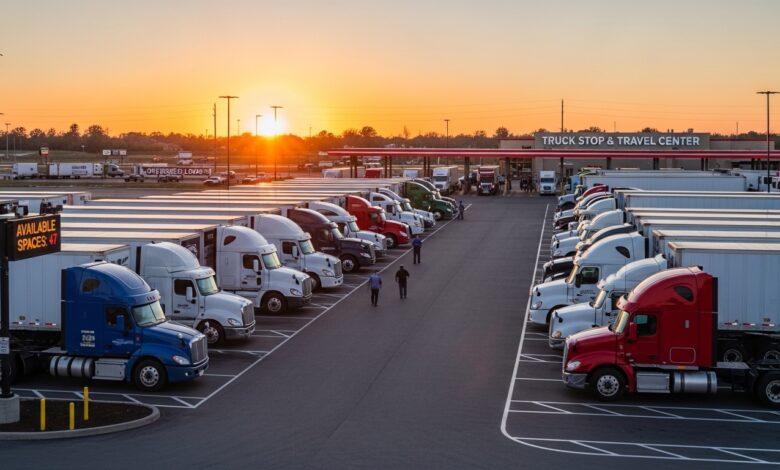
Public truck parking includes rest areas, highway truck stops, and service plazas. These facilities are strategically located along major freight corridors and provide essential amenities such as fueling stations, restrooms, showers, food services, and sometimes minor vehicle maintenance. Public parking is generally accessible to all drivers, making it a convenient option for short-term or overnight stays. However, limited capacity during peak travel times can pose challenges, particularly for long-haul drivers.
Private truck parking is offered by commercial property owners, logistics hubs, or dedicated trucking companies. These facilities often require reservations or monthly agreements and may provide enhanced security measures, including gated access, surveillance systems, and on-site personnel. Private parking is particularly valuable for long-term parking, storage of high-value equipment, or when cargo security is a priority.
Industrial and commercial zone parking is available near warehouses, distribution centers, manufacturing plants, and retail hubs. These spaces are designed to facilitate loading, unloading, and staging of goods, ensuring efficient operations for logistics companies. While industrial parking may provide convenient access to business operations, it is often regulated by time restrictions, permits, and access controls.
Understanding the differences between these parking types helps fleet operators and drivers choose the most suitable option for their operational, safety, and compliance needs.
Considerations in Commercial Truck Parking
Commercial truck parking is subject to an array of federal, state, and local regulations. Federal rules, particularly those enforced by the Federal Motor Carrier Safety Administration (FMCSA), require drivers to take mandated rest periods, making legal parking critical to compliance with hours-of-service regulations. Failure to access compliant parking can force drivers into situations that risk regulatory violations, potentially leading to fines, penalties, or operational interruptions.
State and local regulations further govern where trucks may park, duration of stay, and vehicle types permitted in specific areas. Many municipalities restrict commercial truck parking in residential neighborhoods, downtown areas, or public streets to mitigate congestion, noise, and safety risks. Truck drivers must comply with posted signage, zoning ordinances, and local rules when parking.
For fleet operators, compliance extends beyond the individual driver. They are responsible for route planning, monitoring hours-of-service compliance, and ensuring that drivers have access to approved parking facilities. Failure to consider parking in operational planning can result in cascading regulatory and safety issues, emphasizing the critical role of parking management in commercial trucking operations.
Safety and Security Considerations
Safety and security are paramount when it comes to commercial truck parking. Trucks often carry high-value cargo, fuel, and expensive equipment, making them vulnerable to theft, vandalism, and cargo tampering. Secure parking facilities help mitigate these risks through controlled access, fencing, surveillance cameras, on-site personnel, and adequate lighting.
Driver safety is equally critical. Properly designed parking areas provide sufficient space for maneuvering, clear signage, well-maintained surfaces, and traffic flow that accommodates large commercial vehicles. Poorly designed or overcrowded parking increases the risk of accidents, injuries, and property damage, impacting both drivers and businesses.
Additionally, safety extends to operational protocols. Commercial truck parking facilities should enforce rules regarding vehicle positioning, fire prevention, and access to emergency services. Well-managed parking areas protect drivers, cargo, and assets while contributing to a safer transportation network overall.
Challenges Facing Commercial Truck Drivers
Truck drivers face numerous challenges related to parking availability, particularly along high-traffic freight corridors and in urban centers. One of the primary challenges is limited availability, especially during peak travel periods. Drivers often spend significant time searching for parking, which can disrupt schedules and increase operational costs.
Time pressures associated with federal hours-of-service rules add further complexity. Drivers may reach legal driving limits without locating available parking, forcing them to choose between parking illegally or violating federal regulations. Both scenarios carry serious consequences for safety and compliance.
Cost is another challenge. While some parking options are free, many commercial parking facilities charge fees for overnight or long-term use. Balancing cost with convenience, safety, and compliance considerations requires strategic planning, particularly for independent drivers or small fleets with limited resources.
Technology and Commercial Truck Parking
Technology has become an indispensable tool for addressing the challenges of commercial truck parking. Mobile applications and GPS-enabled platforms provide real-time information on available parking spaces, facility amenities, and pricing. These tools allow drivers to plan stops in advance, minimizing delays and uncertainty.
Fleet management systems integrate parking data into route planning, helping dispatchers and drivers identify compliant parking options along scheduled routes. Some advanced systems use predictive analytics to estimate parking availability based on traffic patterns and historical data, further enhancing operational efficiency.
As technology continues to evolve, it is likely to play an increasingly central role in optimizing commercial truck parking infrastructure, reducing congestion, and improving safety and compliance across the transportation industry.
Planning and Best Practices for Commercial Truck Parking
Effective commercial truck parking management requires proactive planning, coordination, and strategic decision-making. Drivers should identify approved parking locations well in advance, particularly when traveling through areas with limited options. Awareness of regulations, facility amenities, and capacity helps prevent last-minute challenges and supports compliance with hours-of-service rules.
Fleet operators should maintain up-to-date records of approved parking facilities, communicate clearly with drivers, and invest in secure long-term parking options for high-value equipment. Coordination with industrial facilities, warehouses, and logistics hubs ensures that staging and loading activities can be completed efficiently without violating parking regulations.
Responsible behavior is also essential. Drivers and fleet operators should avoid parking in unauthorized areas, respect community concerns, and follow all safety guidelines. These practices support positive relationships with regulators, communities, and customers while minimizing operational risks.
Economic and Industry Impacts of Commercial Truck Parking
Commercial truck parking has far-reaching implications for the efficiency and reliability of the freight industry. Adequate parking infrastructure reduces delivery delays, supports timely freight movement, and contributes to operational cost savings. Conversely, insufficient parking creates congestion, increases driver stress, and can disrupt entire supply chains.
Investments in commercial truck parking infrastructure—whether public rest areas, private parking facilities, or industrial staging zones—have significant economic benefits. They enable efficient logistics operations, enhance driver safety, reduce compliance risks, and improve customer satisfaction. Recognizing commercial truck parking as a vital element of transportation infrastructure is critical for sustaining economic growth and maintaining the flow of goods across regions.
The Future of Commercial Truck Parking
The future of commercial truck parking is closely linked to infrastructure development, technological innovation, and regulatory evolution. Efforts to expand truck parking capacity along major freight corridors, integrate smart parking technology, and develop data-driven solutions will address ongoing challenges of availability and safety.
Public-private partnerships are likely to play a larger role, with logistics companies collaborating with municipalities to create secure, efficient, and accessible parking facilities. As demand for freight transportation continues to grow, commercial truck parking will remain a critical focus for drivers, fleet operators, and industry stakeholders alike.
Conclusion
Commercial truck parking is a vital element of the freight and logistics ecosystem, affecting safety, compliance, efficiency, and driver well-being. Adequate and well-managed parking solutions support operational continuity, protect assets, and ensure adherence to federal, state, and local regulations.
By understanding available parking options, prioritizing safety and security, leveraging technology, and following best practices, drivers and fleet operators can navigate the complexities of commercial truck parking with confidence. Investments in infrastructure, planning, and innovation will continue to enhance the availability and effectiveness of truck parking, supporting the broader transportation industry and ensuring the safe and efficient movement of goods.