If you live in Northeast Indiana, you know the drill. One day it’s 50 degrees and sunny, and the next, you’re scraping an inch of ice off your windshield in sub-zero temperatures. Fort Wayne winters are notorious for their unpredictability and severity, bringing a mix of snow, sleet, freezing rain, and bitter cold. While we bundle up in coats and turn up the thermostat, there is one part of our home that faces the elements unprotected all season long: the driveway.
The freeze-thaw cycle in Indiana is brutal on pavement. Asphalt cracks and buckles, gravel washes away or turns into a mud pit, and pavers shift out of place. This seasonal battle against the elements is why so many homeowners in the area are rethinking their exterior surfaces. Understanding exactly how our local climate impacts your property is the first step toward choosing a solution that lasts longer than a few seasons.
Here is a look at why Indiana weather is so tough on driveways and why concrete is becoming the gold standard for durability in Fort Wayne.
The Science of the Freeze-Thaw Cycle
To understand why driveways fail in Fort Wayne, you have to look at what is happening beneath the surface. The “freeze-thaw cycle” refers to the process where water seeps into the ground or into the pores of your driveway material. When the temperature drops below freezing, that water turns to ice and expands by about 9%.
This expansion creates immense internal pressure. If the water is trapped inside asphalt or a porous stone, it pushes against the material, creating microscopic cracks. When the weather warms up—as it often does during those weird January thaws—the ice melts, and the water penetrates even deeper into those new cracks. When it freezes again, the cracks widen.
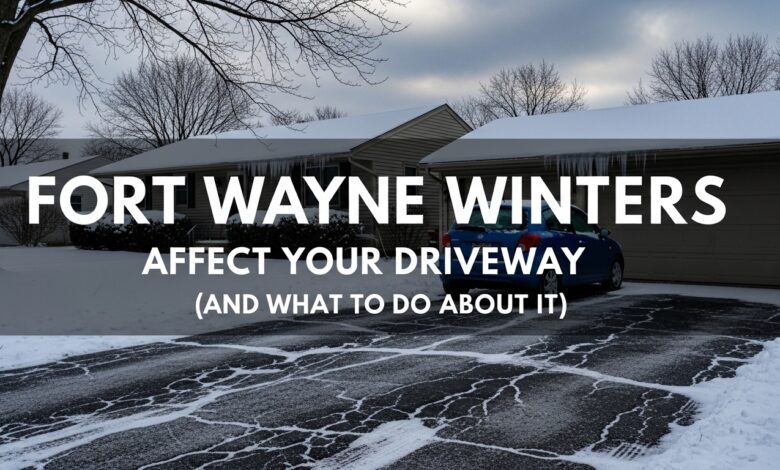
Over the course of a single winter, this cycle repeats dozens of times. By spring, what started as invisible stress points has turned into potholes, heaving, or “alligator cracking” (a series of interconnected cracks resembling alligator skin).
Why Asphalt Struggles in Fort Wayne
Asphalt is a flexible pavement, which sounds like a positive trait. However, in extreme temperature fluctuations, that flexibility becomes a weakness. In the summer heat, asphalt softens. In the winter cold, it becomes brittle. As the ground heaves from frost, brittle asphalt snaps. Furthermore, the edges of asphalt driveways are notorious for crumbling after just a few years of snow shoveling and plowing.
The Concrete Advantage
This brings us to the superior option for our climate. When installed correctly, a concrete driveway in Fort Wayne, IN, offers a rigidity and density that resists water penetration much better than asphalt. Concrete is a rigid pavement; it doesn’t soften in the summer, and high-quality mixes are designed specifically to withstand freezing temperatures without spalling (peeling) or cracking, provided they are sealed and maintained correctly.
Aesthetic Value: Curb Appeal in the Summit City
Beyond the durability factor, there is the undeniable impact on curb appeal. In many Fort Wayne neighborhoods—from the historic streets of West Central to the sprawling suburbs of Aboite—the driveway takes up a significant visual percentage of the front yard.
A gray, crumbling strip of asphalt can make even a pristine house look neglected. Conversely, a crisp, clean concrete surface instantly elevates the property’s aesthetic. It signals to neighbors and potential future buyers that the home has been well-maintained.
Customization Options
Modern concrete isn’t just about flat, grey slabs anymore. Homeowners are increasingly turning to decorative options to match the style of their homes.
- Stamped Concrete: This mimics the look of high-end materials like slate, brick, or cobblestone but maintains the durability of a solid concrete pour.
- Exposed Aggregate: This finish reveals the stones within the concrete mix, creating a rugged, textured look that offers excellent slip resistance—a major bonus when walking to the car on icy mornings.
- Colored Concrete: Instead of surface paint, dyes are mixed directly into the concrete, ensuring the color runs through the entire slab and won’t chip away.
The Long-Term Economics of Driveway Materials
When homeowners start looking for a concrete driveway in Fort Wayne, IN, the initial price tag is often the first topic of conversation. Indeed, the upfront cost of concrete is generally higher than that of gravel or asphalt. However, focusing solely on the installation cost ignores the total cost of ownership.
Maintenance Costs
Asphalt requires significant babying. To keep it viable, it needs to be seal-coated every two to three years. If cracks appear, they must be filled with hot tar immediately to prevent water intrusion. Gravel driveways require annual loads of new stone and regular regrading to fix ruts and washouts.
Concrete, by comparison, is low maintenance. A good quality sealer applied every few years is usually all that is needed to protect the surface from salt and moisture. There is no messy tar, no loose stones in your yard, and no sinking spots where your car tires rest.
Lifespan
An asphalt driveway in a climate with heavy freeze-thaw cycles typically lasts 15 to 20 years, often looking rough for the last five. A properly installed concrete driveway can easily last 30 to 40 years or more. When you amortize the cost over the lifespan of the material, concrete often emerges as the more economical choice.
Choosing the Right Partner for the Job
Because concrete is a permanent addition to your home, the margin for error during installation is slim. Unlike gravel, you can’t just rake it out if it looks uneven. Unlike asphalt, you can’t just heat it and roll it smooth again. You have one shot to get the mix, the pour, and the finish right.
This is where expertise matters. Local soil conditions in Fort Wayne can vary from heavy clay to sandy loam, and the sub-base preparation is critical. If the ground isn’t compacted correctly, even the strongest concrete will settle and crack.
Companies like Crystal Creek Concrete understand the specific geological and climatic challenges of the region. They know the right air-entrainment mixtures to use to prevent freeze damage, and they understand local drainage requirements to ensure water flows away from your foundation and garage.
What to Look for in a Contractor
When evaluating quotes, don’t just look at the bottom line. Ask about:
- Reinforcement: Are they using rebar or wire mesh? Concrete has high compression strength but low tensile strength. Steel reinforcement helps hold the slab together if the ground shifts.
- Concrete Mix: Are they using a mix rated for our cold weather climate (typically 4000 psi or higher)?
- Control Joints: Are they planning to cut control joints at the proper intervals? These intentional “cracks” guide the concrete to relieve stress in straight lines rather than unsightly spiderwebs.
- Thickness: For a standard residential driveway, a thickness of 4 inches is standard, but 5 or 6 inches provides extra peace of mind for heavy vehicles.
Environmental Considerations
Another factor that is becoming increasingly important to Fort Wayne residents is the environmental impact of their home improvements. Asphalt is a petroleum-based product. During the summer, it absorbs heat, contributing to the “heat island” effect that makes urban areas hotter than surrounding rural areas. It also off-gasses hydrocarbons as it heats up.
Concrete is made from abundant natural resources like limestone and water. Because it is lighter in color, it reflects sunlight rather than absorbing it, keeping the surface cooler for kids and pets in the summer. Furthermore, when a concrete driveway eventually reaches the end of its life, the material can be crushed and recycled into aggregate for road bases, keeping it out of landfills.
Is It Time for an Upgrade?
Concrete driveway Fort Wayne in delivers lasting durability, a clean modern appearance, and the strength to withstand Indiana’s harsh freeze-thaw cycles. Take a look at your current driveway. Is it pitted and uneven? Has the blacktop faded into a dull gray that drags down your curb appeal? Are you stepping carefully over heaved cracks every time you roll the trash bin out? If you answered yes, another Indiana winter could be the final straw for your existing pavement. Upgrading to professionally installed concrete not only restores safety and function but also provides a long-term solution built to handle the elements year after year.
Investing in a new surface isn’t just about fixing a place to park your car; it’s about protecting your home’s value and minimizing your weekend maintenance chores. By choosing a material that is tough enough to handle the Hoosier state’s wildest weather swings, you are making a smart, long-term investment in your property.
If you are ready to stop patching cracks and start enjoying a smooth, durable entrance to your home, consider reaching out to Crystal Creek Concrete. Their expertise in navigating the specific challenges of a concrete driveway in Fort Wayne, IN, ensures you get a finished product that stands the test of time—and temperature.