Your website is often the first place customers interact with your business, which makes it one of your most important assets. But websites don’t last forever. Design trends change, technology moves forward, and customer expectations grow every year. Many business owners struggle with knowing the right moment to update their site—or whether a full rebuild is needed.
The truth is, timing matters. If you’re operating in a competitive market like Sydney and noticing your website no longer delivers results, working with a trusted Sydney website development company can help you determine whether a redesign or a complete rebuild is the smartest next step for your business.
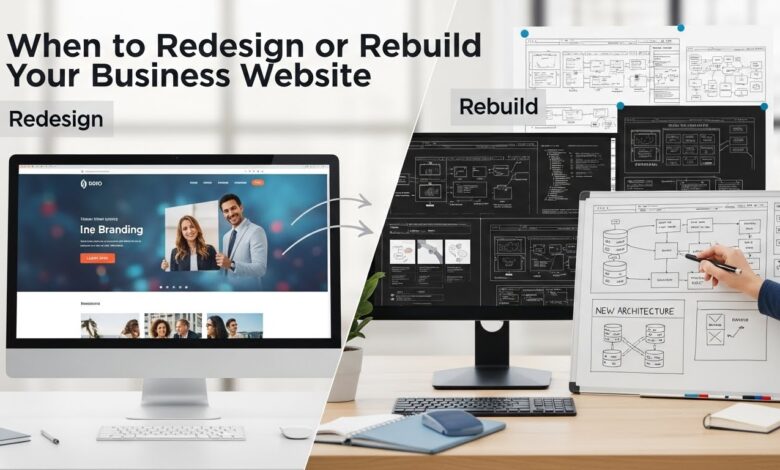
When to Redesign or Rebuild Your Business Website
Now, let’s dive into the details of when to redesign or rebuild your business website and how to make the right decision.
Your Website Looks Outdated
One of the most obvious signs it’s time for a redesign is appearance. If your website looks like it belongs to another decade, visitors may assume your business is outdated, too. Design isn’t just about looks—it influences trust. Users often judge credibility within seconds, and an old design can cause them to leave before reading a single word.
A redesign can modernise visuals, layouts, colours, and typography while keeping the core structure intact. However, if the outdated look is tied to old technology underneath, a rebuild may be the better option.
Your Website Is Not Mobile-Friendly
Mobile traffic now accounts for the majority of web users. If your website doesn’t work smoothly on smartphones and tablets, you’re likely losing potential customers every day. Pinch-to-zoom layouts, broken menus, or slow mobile load times are major red flags.
If your site was built before mobile-first design became standard, a rebuild is often necessary. Modern frameworks ensure responsiveness across all devices and screen sizes, improving both usability and search rankings.
Slow Load Times Are Hurting Performance
Website speed plays a critical role in user experience and SEO. A slow website frustrates users and increases bounce rates, while search engines penalise poor performance.
If performance issues stem from heavy images or outdated design elements, a redesign might fix the problem. But if slow speeds are caused by bloated code, old plugins, or an inefficient backend, rebuilding the site from the ground up is usually the best long-term solution.
Your Business Has Changed or Grown
Your website should reflect who you are today—not who you were years ago. If your services, branding, target audience, or business goals have evolved, your website must evolve too.
A redesign works well when the structure still supports your goals but needs updated messaging and visuals. A rebuild becomes necessary when your current site can’t support new features, integrations, or content strategies required for growth.
Poor User Experience and Low Conversions
If visitors struggle to find information, complete forms, or navigate your site, it’s a sign that something isn’t working. High bounce rates, low engagement, and weak conversion numbers often point to UX issues.
Redesigning navigation, layouts, and calls to action can dramatically improve performance. However, if usability issues are deeply rooted in how the site is built, rebuilding ensures a cleaner, more intuitive experience from the start.
SEO Performance Is Declining
A sudden or gradual drop in search rankings can indicate technical SEO issues. Broken links, outdated code, poor site structure, or a lack of optimisation can all affect visibility.
Sometimes, SEO problems can be fixed with targeted updates. But if your website lacks modern SEO foundations—such as clean code, fast loading, and proper indexing—a rebuild gives you a fresh, optimised base to compete in search results.
Security and Maintenance Are Becoming Difficult
Older websites are harder to maintain and more vulnerable to security threats. Unsupported plugins, outdated CMS versions, and legacy code increase the risk of hacking or data loss.
If regular updates are no longer possible without breaking the site, rebuilding is often safer and more cost-effective. A modern website is easier to maintain, more secure, and better prepared for future updates.
Redesign vs Rebuild: How to Decide
- Choose a redesign if your website structure is solid, but visuals, content, or UX need improvement.
- Choose a rebuild if your website is slow, insecure, difficult to update, or built on outdated technology.
An experienced development team can audit your site and guide you toward the best decision based on performance, goals, and budget.
Conclusion
In conclusion, knowing when to redesign or rebuild your business website is key to staying competitive, credible, and conversion-focused. A website that no longer supports your goals shouldn’t hold your business back—it should move it forward.
FAQs: Redesigning or Rebuilding Your Business Website
1. How often should a business website be redesigned or rebuilt?
Most websites benefit from a redesign every 2–3 years and a rebuild every 4–6 years, depending on technology and business needs.
2. Is a rebuild more expensive than a redesign?
Yes, a rebuild typically costs more upfront, but it often saves money long-term by reducing maintenance and improving performance.
3. Will redesigning my website affect SEO?
A proper redesign can improve SEO, but poor execution can harm rankings. Planning and technical SEO best practices are essential.
4. Can I keep my content when rebuilding a website?
Yes. Most content can be migrated, though it’s often a good opportunity to update and optimise it.
5. How do I know which option is right for my business?
A professional website audit will identify whether your current site can be improved or needs to be rebuilt entirely.