Comprehensive Strategies and Effective Solutions for Ensuring the Longevity and Structural Stability of Your Home Through Proper Foundation Repair Techniques and Preventative Measures

Understanding the Critical Importance of Foundation Stability in Residential Structures
The foundation of any home serves as the essential base upon which the entire structure relies for stability, safety, and long-term durability, and any compromise in its integrity can result in significant structural, financial, and safety consequences that are often more complex to address than many homeowners anticipate, making it imperative to understand the various causes of foundation damage, the warning signs that indicate potential issues, and the comprehensive methods available to repair and prevent deterioration over time.
Common Indicators and Manifestations of Foundation Damage That Require Immediate Attention
Foundation problems typically present themselves through a variety of physical symptoms, each of which can provide critical information regarding the severity and underlying causes of the issue, ranging from visible cracks in walls, floors, and ceilings to uneven or sloping flooring that disrupts both the aesthetic and functional aspects of a home, sticking doors and windows that indicate frame misalignment caused by shifting structural components, and water intrusion in basements or crawl spaces that often signifies improper drainage or excessive hydrostatic pressure against foundation walls, all of which require careful observation and timely professional evaluation to prevent escalation.
The Role of Soil Conditions, Moisture Levels, and Environmental Factors in Foundation Deterioration
The stability of a foundation is heavily influenced by the type of soil on which the home is built, the moisture content of the surrounding ground, and environmental factors such as precipitation and landscaping practices, with expansive clay soils posing a significant threat due to their tendency to absorb water and expand, thereby exerting lateral pressure on foundation walls, while drought conditions can cause soil shrinkage that creates voids beneath the structure, leading to differential settling and uneven stress distribution that may compromise structural integrity over time, making it essential for homeowners to not only monitor these factors but also implement preventative strategies such as grading, proper drainage, and controlled irrigation to maintain a balanced moisture level around the foundation.
Techniques and Methods for Effective Foundation Repair
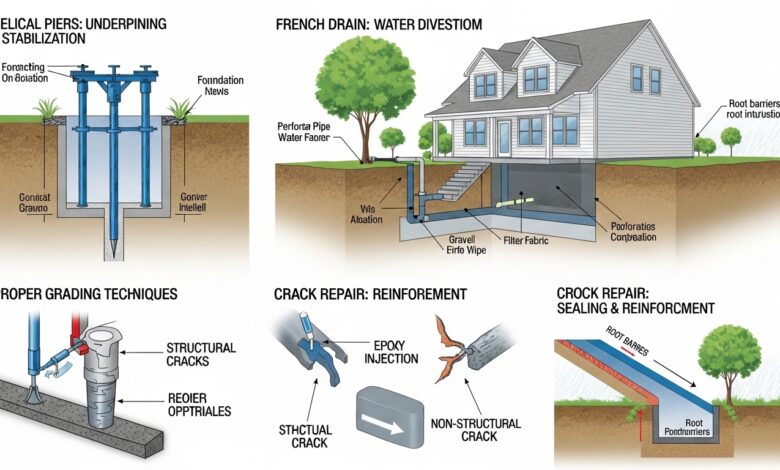
Foundation repair strategies are highly dependent on the specific type of damage present, the structural design of the building, and the underlying soil and environmental conditions, with common approaches including underpinning, which involves extending the foundation to reach more stable soil layers and thereby stabilize areas experiencing excessive settling; piering or piling, which utilizes steel or concrete supports driven deep into the soil to lift and reinforce the structure while preventing further movement; and slab jacking, which entails injecting a specialized mixture beneath sunken concrete surfaces to restore their original elevation, all of which require precise engineering assessments and professional execution to ensure long-term effectiveness and to avoid exacerbating existing problems.
The Crucial Importance of Water Management and Drainage Systems in Preserving Foundation Integrity
One of the most critical factors influencing the longevity and stability of a foundation is the effective management of water around the structure, as uncontrolled water accumulation can dramatically increase hydrostatic pressure on walls and promote soil erosion that undermines the foundation over time, making the installation of comprehensive drainage solutions indispensable, including gutters, downspouts, French drains, and sump pumps, the latter of which plays a pivotal role by actively removing excess water from basements or crawl spaces, thereby preventing moisture buildup that could compromise the foundation, and homeowners who choose to install a sump pump as part of their drainage system significantly reduce the risk of water-related foundation problems while enhancing the overall resilience of their property.
Preventative Measures and Long-Term Maintenance Strategies to Protect Foundations from Future Damage
Preventing foundation problems is always preferable to repairing severe structural damage, and a combination of proactive strategies can greatly extend the life of a foundation, including ensuring that the grading of the land slopes away from the home to promote proper runoff, controlling soil moisture levels to avoid excessive swelling or shrinkage that stresses the foundation, regularly inspecting the foundation and related structural components to identify minor issues before they escalate, and maintaining all drainage systems, particularly sump pumps, which should be tested periodically to ensure operational readiness during periods of heavy rainfall or elevated groundwater levels, all of which contribute to a stable, well-maintained foundation capable of supporting the home for decades.
Recognizing When Professional Intervention Is Necessary for Complex Foundation Problems
Although some minor cracks or aesthetic concerns may be managed with simple DIY solutions, certain signs indicate that professional intervention is essential to prevent catastrophic structural failure, such as rapidly widening cracks, doors and windows that no longer function properly, pronounced sagging or uneven floors, persistent water intrusion despite attempts to redirect runoff, and significant exterior wall cracks that compromise the structural envelope of the home, with experienced foundation specialists able to perform detailed evaluations, determine the root cause of the problem, and implement repair solutions such as piering, underpinning, or slab jacking while integrating preventative measures like drainage improvements or the installation of a sump pump, ensuring a comprehensive approach to long-term foundation health.
Integrating Foundation Repair with Modern Drainage Solutions for Maximum Effectiveness
For optimal results, foundation repair should not be approached in isolation but rather combined with modern drainage solutions to address both structural and environmental factors contributing to deterioration, with the installation of a sump pump representing a critical component in this integrated strategy, as it provides a reliable means of controlling water levels around the foundation and mitigating the risks associated with hydrostatic pressure, soil erosion, and moisture infiltration, thereby complementing repair methods such as piering or underpinning to provide a holistic, long-lasting solution that preserves the integrity and value of the home while minimizing the likelihood of future foundation-related issues.
Long-Term Monitoring, Maintenance, and Preventative Best Practices Following Foundation Repair
Even after significant foundation repair work has been completed, long-term monitoring and maintenance remain essential to ensure that the repairs remain effective and that new problems do not arise, including regularly inspecting for signs of renewed cracking or settling, maintaining proper grading and landscaping to prevent water accumulation near the foundation, keeping gutters, downspouts, and drainage systems clean and functional, and periodically testing any installed sump pump to ensure it operates efficiently during heavy rainfall, with these practices collectively serving to protect the structural integrity of the foundation, prevent costly repairs, and provide peace of mind to homeowners who have invested in preserving the stability and safety of their property.
Conclusion: Comprehensive Approaches to Maintaining Foundation Stability and Protecting Property Value
The stability and durability of a home’s foundation are paramount to the overall safety, functionality, and value of the property, and addressing issues promptly through a combination of repair techniques, preventative measures, and long-term maintenance strategies is essential to avoid catastrophic consequences, with modern solutions such as piering, underpinning, slab jacking, and the strategic decision to install a sump pump playing key roles in ensuring that both structural and environmental factors are effectively managed, and homeowners who adopt a proactive, holistic approach to foundation care can secure the longevity, resilience, and value of their homes for decades to come, creating a safe and stable environment that supports both their investments and their daily lives.