Horror games come and go. Some make a splash for a year or two, build a cult audience, then quietly fade into “remember when” conversations on gaming forums. Very few survive long enough to celebrate a tenth anniversary, let alone a thirtieth. And almost none manage to stay genuinely relevant — not just alive, but actually influential — across three decades of an industry that changes faster than almost any other creative field on the planet.
Resident Evil is that rare exception. Not because Capcom got lucky. Not because nostalgia is carrying dead weight. But because the people behind this franchise have repeatedly made bold, uncomfortable, sometimes wildly controversial decisions — and more often than not, those decisions turned out to be right.
What Requiem Represents
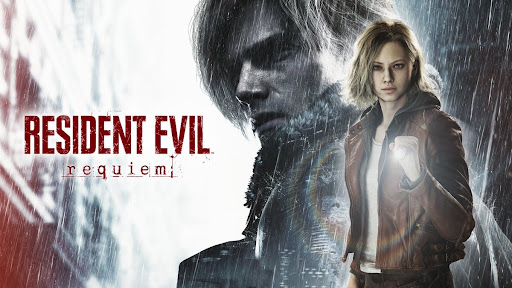
The announcement of a new mainline entry — Resident Evil Requiem — has predictably sent the community into full theorizing mode. Plot speculation, wishlist threads, debates about whether it will continue Ethan’s story or pivot to someone new. That level of sustained conversation, months before launch, is a testament to how much stock people have put into this franchise’s modern era.
For players planning to be there from day one, the hunt for a Resident Evil Requiem Steam Key has already begun in earnest. Reputable key marketplaces have become an increasingly practical option for budget-conscious players — the kind of platforms that offer cheap steam keys without any of the grey-market anxiety that used to come with that category. Getting set up early makes sense given how quickly demand spikes around major franchise releases.
The question isn’t really whether Requiem will be good. Capcom’s record since RE7 has been strong enough to warrant genuine confidence. The more interesting question is which direction the team decides to pull in — whether this entry leans into the slower, more psychological horror that defined RE7, or the grander theatrical scale Village embraced. Either direction, handled with the same craft the studio has brought to the last few entries, would be worth the wait.
It Started With a Haunted House and a Limited Ammo Count
Go back to 1996 for a moment. The first Resident Evil dropped players into a mansion that felt genuinely wrong — crooked hallways, rooms that didn’t quite make spatial sense, locked doors hiding things that were better left alone. The fixed camera angles weren’t just a technical limitation of the hardware. They were weaponized. Capcom pointed the camera at exactly what they wanted players to see, and hid everything else in shadow.
What made it stick wasn’t the zombies. Zombies were already a known quantity in pop culture. What made it stick was the math. Players had to think about every single bullet. Every healing herb. The ink ribbons required to save progress felt like a tax on comfort — use too many and the psychological pressure of not being able to save mounted until it became its own kind of horror. That friction was intentional, and it worked in ways developers are still studying.
The Spencer Mansion became a masterclass in environmental storytelling before that phrase was even commonly used. Notes scattered around the building built a picture of everything that had gone wrong before players arrived. The horror wasn’t just in the creatures — it was in understanding, slowly, what had happened to the people who used to live and work there.
The Franchise That Broke Its Own Mold (Twice)
Here’s something that doesn’t get enough credit: most beloved franchises eventually become prisoners of their own formula. Resident Evil could have spent the 2000s releasing slightly prettier versions of the original template and probably done just fine commercially. Instead, Capcom blew the entire structure apart with Resident Evil 4.
The shift to third-person over-the-shoulder was jarring at the time. Long-time fans weren’t sure what to make of it. Action-forward, European setting, a merchant who offered upgrade menus — it felt like a different game wearing a familiar name. Then people actually played it. The tension was still there. The resource management was still there. The grotesque, inventive enemy design was absolutely still there. RE4 just delivered all of it through a completely different mechanical language — one that turned out to be so effective that its fingerprints are visible on virtually every third-person action game released in the decade that followed.
Then history repeated itself. Resident Evil 7: Biohazard arrived in 2017 and pulled the same trick. First-person perspective. Small cast. A decaying farmhouse in rural Louisiana instead of European villages or urban wastelands. Fans panicked again. And again, the panic turned out to be unnecessary. RE7 was terrifying in a way the series hadn’t been in years — claustrophobic, personal, relentless in its first half. It stripped everything back down to basics and remembered what the franchise was actually about before it started adding military operatives and helicopter sequences.
Village and the Ongoing Reinvention
Resident Evil Village sits at an interesting crossroads. It took RE7’s first-person foundation and layered on the theatrical excess of RE4 — gothic castles, flamboyant villains, a story that kept escalating in ways that felt almost operatic by the end. Lady Dimitrescu became a cultural moment within weeks of the reveal trailer. The game’s four-house structure gave it a variety that kept momentum high across a ten-plus hour runtime.
What Village confirmed is that the modern Resident Evil team understands something crucial: horror doesn’t require a single tone. Dread and spectacle can coexist. A sequence that’s genuinely frightening can be followed by something almost darkly funny without breaking immersion — as long as the world and characters are consistent. Village walked that line better than most games manage, and it did it while delivering one of the better-looking environments in gaming history thanks to Capcom’s RE Engine.
Why Nothing Else Has Managed to Knock It Off
Several franchises have taken genuine runs at Resident Evil’s crown. Dead Space built something impressive in the sci-fi horror space. The Silent Hill series, at its peak, offered a more abstract and psychological flavor of horror that some would argue cut deeper. Outlast proved that removing combat entirely could produce some of the most intense first-person horror experiences available.
None of them have matched Resident Evil’s combination of longevity, commercial scale, and creative consistency. Part of that is resources — Capcom has invested heavily in the franchise and it shows. Part of it is the willingness to keep taking risks rather than coasting. Dead Space went quiet for over a decade. Silent Hill spent years in a creative wilderness before recent revival attempts began showing signs of life. Resident Evil never went quiet. It stumbled in places — RE6 tried to be four different games at once and none of them quite worked — but it kept moving.
The back catalogue is also one of the strongest in gaming. Newcomers who want to understand why the series commands such loyalty can trace a genuine creative lineage from the 1996 original through to the present day. The remakes of RE2 and RE4 in particular function as both loving reconstructions of beloved originals and excellent standalone experiences. Finding cheap steam keys for older entries has never been easier, and the quality holds up remarkably well.
More Than a Game Series
Resident Evil long ago crossed the threshold from franchise to cultural phenomenon. The film series — for all its liberties with source material — kept the brand visible to audiences who had never touched a controller. The animated entries like Infinite Darkness brought game-accurate storytelling to streaming platforms. Merchandise, crossovers, limited events in other games — the ecosystem around these releases has grown into something genuinely unusual for a horror property.
The community that has built up around the franchise is equally impressive. Speedrunners have wrung extraordinary optimization out of every mainline entry. Modders have extended the life of individual games for years beyond their initial releases. The conversation around the series — on forums, in YouTube essays, across streaming platforms — never really stops.
The Bottom Line
Resident Evil has earned its position at the top of the horror genre through consistent creative courage and a refusal to treat its audience as a captive market. Every generation of fans has had at least one entry that felt made specifically for them, and the franchise has somehow managed to bring most of those audiences along for each reinvention rather than leaving them behind.
With Requiem on the horizon, picking up a Resident Evil Requiem Steam Key through a trusted platform offering genuine value is the straightforward play for anyone who has followed the series — or anyone curious enough to see what three decades of survival horror mastery looks like when it’s still actively evolving.