Calculus Concepts is one of the most important branches of mathematics, providing the tools to study change, motion, growth, and accumulation. Developed independently by Sir Isaac Newton and Gottfried Wilhelm Leibniz in the 17th century, calculus has become the foundation of modern science, engineering, economics, and technology. From predicting the motion of planets to optimizing machine learning algorithms, calculus plays a vital role in solving real-world problems.
What Is Calculus?
Calculus is the mathematical study of continuous change. It is broadly divided into two major branches:
- Differential Calculus, which focuses on rates of change and slopes of curves.
- Integral Calculus, which deals with accumulation, areas under curves, and total quantities.
These two branches are connected by the Fundamental Theorem of Calculus, one of the most significant results in mathematics.
Limits
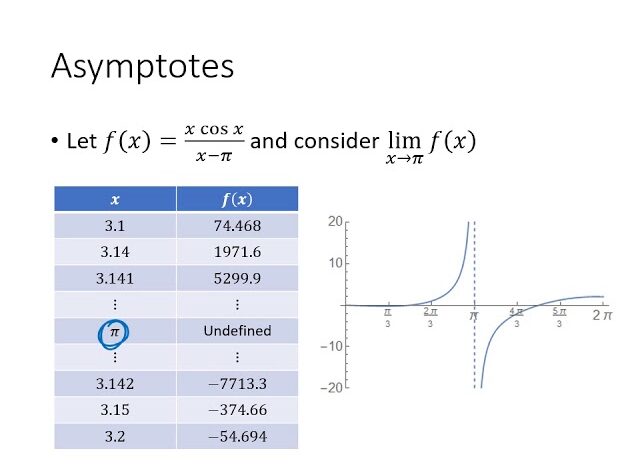
The concept of a limit forms the foundation of calculus. A limit describes the value that a function approaches as its input gets closer to a particular point. Limits allow mathematicians to analyze functions even when direct substitution is impossible.
For example, when studying a function near a point where it is undefined, limits help determine the function’s behavior without evaluating it directly.
Applications of limits include:
- Determining continuity
- Defining derivatives
- Defining integrals
- Evaluating infinite sequences and series
Continuity
A function is continuous if it can be drawn without lifting a pencil from the paper. In mathematical terms, a function is continuous at a point if:
- The function is defined at that point.
- The limit exists.
- The limit equals the function’s value.
Continuous functions are essential because differentiation and integration generally require continuity over an interval.
Derivatives
A derivative measures how quickly a quantity changes with respect to another quantity. Geometrically, it represents the slope of the tangent line to a curve at a given point.
Derivatives are widely used in:
- Finding velocity and acceleration
- Optimizing profits and costs
- Predicting growth rates
- Machine learning optimization
- Engineering design
Some common differentiation rules include:
- Constant Rule
- Power Rule
- Product Rule
- Quotient Rule
- Chain Rule
Applications of Derivatives
Derivatives help solve optimization problems by identifying maximum and minimum values of functions. Businesses use derivatives to maximize profits and minimize costs, while scientists use them to model physical phenomena such as motion and population growth.
Other applications include:
- Economics
- Physics
- Biology
- Computer graphics
- Artificial intelligence
Integrals
An integral represents accumulation. It measures quantities such as area, distance, volume, and total change.
There are two main types of integrals:
Definite Integrals
These calculate the exact accumulated value over a specific interval.
Indefinite Integrals
These determine the family of antiderivatives of a function.
Integration techniques include:
- Substitution
- Integration by Parts
- Partial Fractions
- Trigonometric Substitution
- Numerical Integration
Fundamental Theorem of Calculus
The Fundamental Theorem of Calculus connects differentiation and integration. It states that differentiation and integration are inverse processes. This theorem allows many definite integrals to be evaluated efficiently using antiderivatives instead of geometric approximations.
Infinite Series
Calculus also studies infinite series, which are sums of infinitely many terms. Important series include:
- Geometric Series
- Harmonic Series
- Taylor Series
- Maclaurin Series
Taylor series enable complicated functions to be approximated using polynomials, making them invaluable in numerical computation and scientific modeling.
Multivariable Calculus
While basic calculus focuses on functions of one variable, multivariable calculus extends these ideas to functions involving several variables.
Key topics include:
- Partial derivatives
- Multiple integrals
- Gradient vectors
- Divergence
- Curl
- Vector fields
These concepts are fundamental in physics, engineering, economics, and data science.
Differential Equations
Differential equations describe relationships involving unknown functions and their derivatives. They model countless real-world systems, including:
- Population growth
- Heat transfer
- Fluid dynamics
- Electrical circuits
- Planetary motion
- Epidemic spread
Solving differential equations allows scientists and engineers to predict system behavior over time.
Real-World Applications of Calculus
Calculus is indispensable across many fields:
- Physics: Motion, forces, electricity, and quantum mechanics.
- Engineering: Structural analysis, robotics, and control systems.
- Economics: Marginal cost, revenue, and optimization.
- Medicine: Drug concentration modeling and medical imaging.
- Computer Science: Computer graphics, optimization algorithms, and machine learning.
- Finance: Risk analysis, investment modeling, and option pricing.
Conclusion
Calculus is far more than an academic subject—it is a powerful language for describing and understanding change. Concepts such as limits, continuity, derivatives, integrals, series, and differential equations enable us to analyze everything from microscopic particles to planetary motion. As technology and science continue to advance, calculus remains an essential tool for innovation, problem-solving, and discovery across virtually every discipline.